This translation was prepared with AI assistance and reviewed by the editorial team.
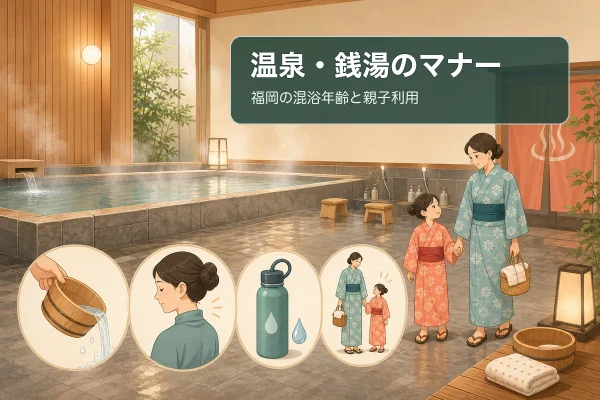
Japanese onsen and sento are shared bathing spaces, not swimming pools. The core routine is simple: wash or rinse before entering a bath, keep hair and towels out of the water, move quietly, and dry your body before returning to the changing room. Facility signs always take priority over general etiquette.
- In Fukuoka, children age 7 and older cannot use the opposite-sex public bath
- Facilities may set stricter age, height, diaper or tattoo rules
- No photography or phone use in changing and bathing areas
- Hydrate, avoid bathing after alcohol, and supervise children within reach
Fukuoka Prefecture and municipal bathing rules, national hot-spring safety advice and the Japanese source were checked on August 3, 2026.
The age-seven mixed-bathing rule
| Situation | What visitors should do |
|---|---|
| Before the tub | Rinse or wash the body |
| Long hair | Tie it up above the water |
| Small towel | Keep it outside the tub |
| Changing room | Dry off before entering |
| Photos | Do not use a camera or phone |
Who can bathe together
Fukuoka’s public-bath standard does not allow boys and girls age 7 or older to enter the opposite-sex bath. A seven-year-old therefore needs a same-sex accompanying adult, an appropriate independent-use arrangement accepted by the facility, or a private family bath.
This is a maximum legal boundary, not a guarantee that every six-year-old may enter. A facility can use a lower age, height or school-grade rule. Respect the child’s comfort as well as the posted rule. Private baths, guest-room baths and swimsuit areas may have different conditions.
Before entering the bath
Put phones and cameras away before entering the changing room. Check whether towels and toiletries are provided, remove shoes where instructed, use the toilet first, and drink some water. Do not bathe after drinking alcohol or when feverish, vomiting, having diarrhea or otherwise unwell.
In the washing area, rinse sweat and dirt before entering a shared tub. Some facilities expect a full wash with soap first. Start with warm water on hands and feet, and keep the shower aimed away from other guests.
Inside the washing and bathing area
Tie long hair so it cannot touch the bath. Do not put a wash towel, soap, bottle or hair in the water. Do not swim, dive, splash, run, speak loudly or reserve a washing station with belongings. Rinse the stool and bowl after use and return them where the facility indicates.
The small towel can be left on a shelf, folded on the side if allowed, or placed securely on the head. Follow local signs. Onsen water is not for drinking unless there is a clearly marked drinking spring with its own instructions.
Children and family-bath options
Rules for children in diapers vary widely. Some baths allow a baby bath only; others do not allow children who are not toilet-trained. A swim diaper is not automatic permission. Ask before traveling if the official site does not clearly state the rule.
Keep infants and young children within arm’s reach around tubs, showers and outdoor baths. A child can drown silently. Have the child leave the tub while the adult washes hair, avoid long hot soaks, and watch for unusual quietness, red face, sweating or irritability. If only an opposite-sex parent is traveling with a child age 7 or older, choose a reservable family bath rather than sending an unready child alone.
Tattoos, phones and facility-specific rules
Tattoo policies are set by each facility. Some refuse entry, some accept a cover seal within a size limit, and some recommend a private bath. Check the exact facility before paying or traveling; never assume one onsen’s policy applies to another.
Phones and smartwatches with cameras can create privacy concerns even when not actively recording. Keep them in the locker unless a facility specifically allows use in a non-bathing area. Also check rules for bathing garments, stoma equipment, mobility assistance, medical devices and companion carers in advance.
Heat, hydration and leaving safely
Hot water, humidity and standing suddenly can cause dizziness. Drink water before and after bathing, enter gradually, take breaks and leave immediately if you feel nausea, headache, palpitations or lightheadedness. People with fluid restrictions or medical conditions should follow their clinician’s advice.
At the exit, wipe water from your body and hair before stepping into the changing room. Do not occupy a dryer or mirror longer than needed, remove fallen hair, return rental items, and rest before driving. These small steps protect both privacy and safety.