This translation was prepared with AI assistance and reviewed by the editorial team.
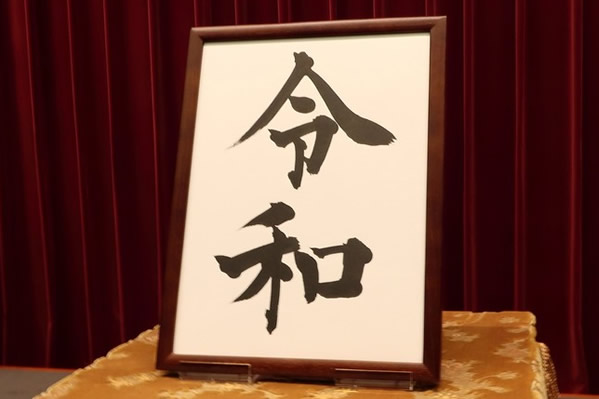
Reiwa, the era name used in Japan since 2019, was drawn from a preface in the Man'yoshu describing a plum-blossom banquet. The banquet was held in 730 at the residence of Otomo no Tabito, then head of the Dazaifu government.
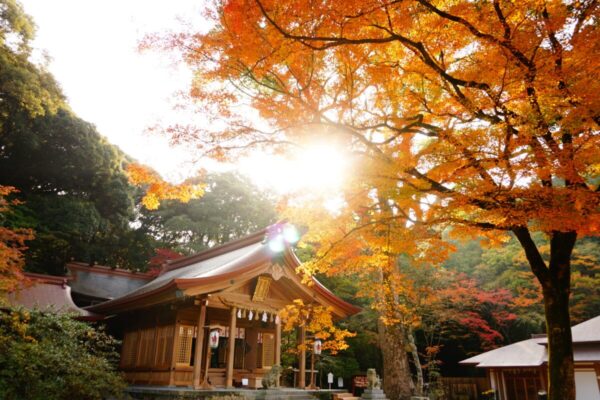
The exact location of that residence has not been conclusively established. Sakamoto Hachimangu is associated with the story, but visitors should distinguish local tradition from a confirmed archaeological identification.
Key information
| Item | Details |
|---|---|
| Historical event | Plum Blossom Banquet held in 730 |
| Literary source | Man'yoshu, preface to the plum-blossom poems |
| Host | Otomo no Tabito, Dazaifu official and poet |
| Suggested stops | Dazaifu Government Office ruins, Exhibition Hall, Sakamoto Hachimangu |
| Exhibition Hall | 9:00–16:30; generally closed Monday |
| Admission | Non-resident adult ¥400; lower rates and exemptions apply |
What the Reiwa connection means
The cited passage evokes a fine early-spring month, gentle air and blooming plum trees. It belongs to the Japanese Man'yoshu tradition rather than a Chinese classical source quoted directly as the era-name origin. The banquet gathered officials and cultural figures around poetry, showing Dazaifu as a political and international cultural centre of ancient Kyushu.
A sensible walking order
Begin at the Dazaifu Government Office ruins to understand the scale and orientation of the ancient administrative centre. Continue to the Dazaifu Exhibition Hall, where excavated remains and displays provide context that is difficult to see in the open field. Then walk to Sakamoto Hachimangu, a small shrine linked in local interpretation to the plum-blossom story.
- Government Office ruins: landscape and scale
- Exhibition Hall: archaeology and explanations
- Sakamoto Hachimangu: shrine and local association
Dazaifu Exhibition Hall details
The hall is open 9:00–16:30 and generally closes Monday, the following day when Monday is a holiday, and over the year-end period. Admission for people who do not live, work or study in Dazaifu is ¥400 for adults and ¥200 for high-school or university students; elementary and junior-high students enter free. Resident-related discounts have separate eligibility. The address is 4-6-1 Kanzeonji, Dazaifu.
Reading the site carefully
Do not treat a modern sign, tourism nickname or later shrine tradition as proof of an exact eighth-century building location. The value of the route is that literature, excavated government remains and continuing local memory can be viewed together. Wear comfortable shoes, allow extra time for museum explanations and check closure information before travelling.