This translation was prepared with AI assistance and reviewed by the editorial team.
Bike sharing is useful for short trips between Tenjin, Ohori Park, Hakata Port and neighborhoods that are awkward to connect by subway. Fukuoka’s main services use different vehicles and pricing, so choose by port availability, route and whether you want a bicycle or an electric kick scooter.
In Japan, bicycles and electric kick scooters are road vehicles. Ride on the left, obey signals, do not use a phone or hold an umbrella, and never ride after drinking alcohol. Enforcement of bicycle traffic violations expanded on April 1, 2026.
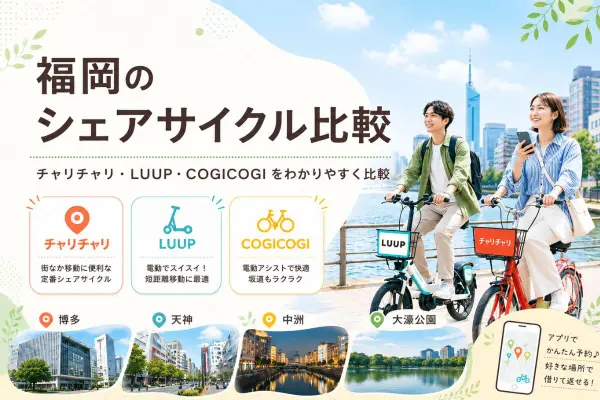
Charichari, LUUP and COGICOGI compared
| Service | Vehicle | Best for | Important point |
|---|---|---|---|
| Charichari | Regular and electric-assist bicycles | Dense central-Fukuoka network and short daily rides | Per-minute pricing; port supply changes quickly |
| LUUP | Electric kick scooters and electric-assist bicycles | Travelers already familiar with the app and traffic rules | Age and identity checks apply; scooter rules differ from bicycles |
| COGICOGI | Electric-assist bicycles | Longer sightseeing blocks where an available plan fits | Check current ports and plan duration before purchase |
Fukuoka City lists Charichari’s standard rate as ¥6.5 per minute for a regular bicycle and ¥20.5 per minute for an electric-assist bicycle as of March 2026. LUUP lists a base fare plus per-minute charge in Fukuoka. Prices, promotions and passes can change, so the amount displayed in the app before unlocking is the final reference.
How to choose
Choose Charichari when port density is the priority. It is practical for flat central routes and you can switch to an e-bike for hills. Choose LUUP only if you understand the vehicle-specific rules; an electric kick scooter is not simply a bicycle with a motor. Choose COGICOGI when its current time plan and port locations match a longer ride.
Download and register before leaving Wi-Fi. Overseas phone numbers or payment cards may not work with every service, and identity verification can take time. Keep another transport option ready.
Good sightseeing routes
- Tenjin–Ohori Park–Fukuoka Castle: a mostly manageable central ride with sightseeing stops.
- Tenjin–Hakata Port: useful for Bayside Place, Marine Messe and the waterfront, especially when buses are busy.
- Hakata Station–Canal City–Kushida Shrine: short distances, but heavy pedestrian traffic requires slow, careful riding.
- Momochihama: attractive along the coast, but it is farther from the center and headwinds can make an e-bike worthwhile.
Do not plan a one-way trip until the destination app shows a port with spaces. A full port or geofenced return area can force you to continue riding.
Rules international visitors often miss
- Bicycles normally use the roadway on the left. Sidewalk riding is allowed only in specified cases, and pedestrians have priority.
- Helmets are strongly recommended for bicycle riders. Service-provided helmets and sizes vary.
- Electric kick scooters have their own age and license classification. Complete the operator’s required test and identity checks.
- Park only at an approved port and finish the return in the app. A photograph may be required.
- Travel insurance does not always cover rented vehicles or traffic violations.
Rain, heat and luggage
Fukuoka’s summer heat and sudden rain can make a short route difficult. Avoid riding during typhoons, strong wind or heavy rain. Shared bicycles have little luggage space; suitcases should stay at a hotel or station locker. After dark, confirm the lights work and wear visible clothing.
Official links
Check live ports and prices in the Charichari, LUUP and COGICOGI services. Fukuoka City publishes current cycling rules. Drivers can instead use the Fukuoka Airport parking guide.