This translation was prepared with AI assistance and reviewed by the editorial team.
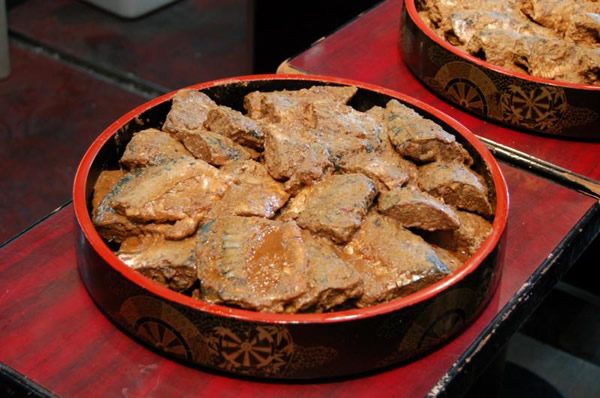
This is not raw fish pickled in rice bran. The fish is fully cooked, and the mature nukadoko is used as part of the seasoning. You may also see the names nukamiso-daki or jinda-ni. Recipes differ by household and shop, so sweetness, peppery heat and the softness of the bones vary.
History behind Kokura’s rice-bran cooking
Kitakyushu City records that in 1626, Kokura lord Hosokawa Tadatoshi sent a rice-bran bed to his father Tadaoki. Fish simmered with this seasoning later spread among households in the former Buzen region. The local rice-bran food culture was recognised in Japan’s 100-Year Food programme for fiscal 2021, in the traditional-food category, and received a special jury award. This history concerns the wider food culture, not the founding date of every shop.
What to expect from the flavor
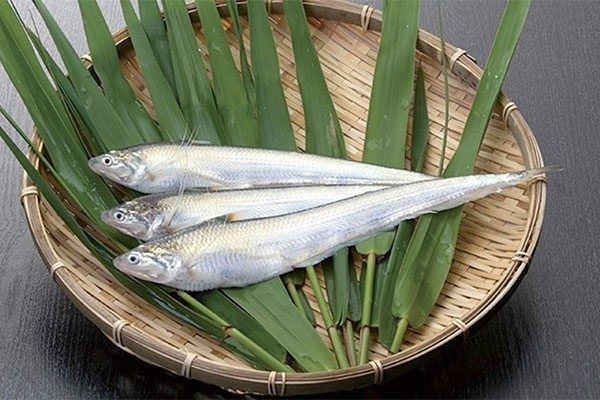
The basic profile is similar to rich Japanese simmered fish, with extra body from the fermented rice bran. Mackerel and sardines are common, while chili and sansho pepper add aroma and a mild kick. Start with warm white rice, or try a small amount with sake or shochu. If you are sensitive to bones or spice, ask the shop before buying.
Nukadaki at a glance
| Local area | Kokura and the former Buzen region, now centred on Kitakyushu |
|---|---|
| Common fish | Mackerel and sardines |
| Other names | Nukamiso-daki and jinda-ni |
| Where to look | Tanga Market, Kokura Station area restaurants and Kitakyushu souvenir shops |
| How to eat it | With rice, in ochazuke, in an onigiri after removing bones, or as a drink accompaniment |
Where to eat or buy it in Kokura
Kitakyushu City publishes a current Nukadaki Map listing places to eat and buy the dish around Kokura Station and elsewhere in the city. Tanga Market has long-established prepared-food shops such as Usami Shoten, Tachibanaya and Fujita. Opening days, stock and fish types change, so use the city map and confirm at the shop. The official map is available in English, Korean, Simplified Chinese and Traditional Chinese.
Tanga Market: match the shop signs for Hyakunendoko Usami Shoten (百年床 宇佐美商店), Nukadaki Tachibanaya (ぬかだき 橘屋) and Nukamisodaki Fujita (ぬかみそだき ふじた). For current market access and visiting advice, see our Tanga Market guide.
Take-home tips for travelers
- Check whether the product is shelf-stable, refrigerated or frozen; cooked fish is not automatically safe at room temperature.
- Ask about the use-by date, storage after opening and whether a cold pack is needed for a long journey.
- Bone texture varies by product. Remove bones carefully before using the fish in onigiri or serving it to children.
Official culture and shop information
Kitakyushu City: what is nukadaki? Kitakyushu multilingual Nukadaki Map Agency for Cultural Affairs: 100-Year Food
Try a related dish in Fukuoka City
In Takasago, Fukuoka City, Nukadoko Chizuka (ぬか床 千束・ちづか) offers weekday lunch with a choice of fish or meat cooked with its rice-bran bed, as well as take-home prepared foods. It is an option if you are staying in Fukuoka City rather than travelling to Kokura. The address is 2-9-5 Takasago, Chuo-ku. See our Chizuka lunch and shop guide, and check the shop’s official information before visiting. Lunch availability and take-home stock are not guaranteed. For a broader itinerary, use our first-time Fukuoka travel guide.
Culture and shop information checked on 8 October 2026.