This translation was prepared with AI assistance and reviewed by the editorial team.
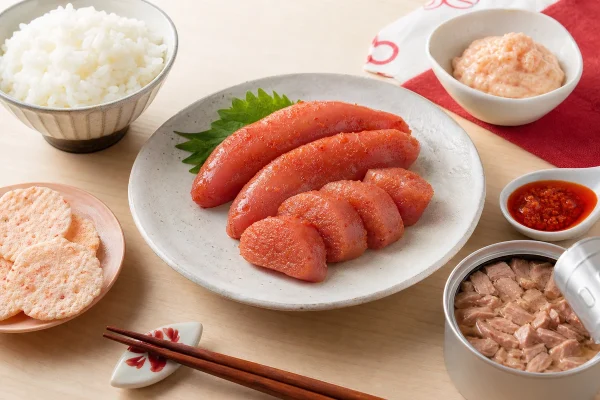
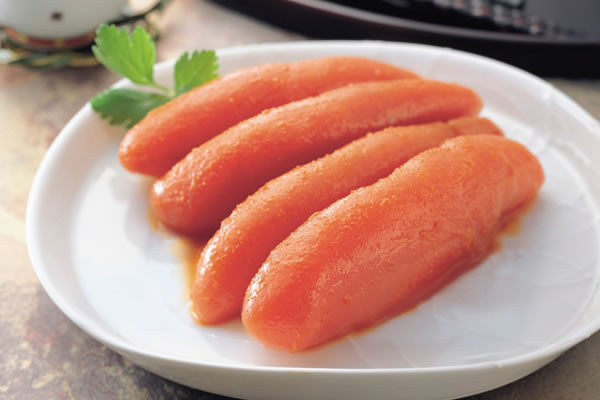
Karashi mentaiko—pollock roe seasoned with chilli—is one of Fukuoka’s best-known foods and souvenirs. It appears at hotel breakfasts, izakaya, ramen shops and station stores, but its history also reflects Fukuoka’s long connection with Korea and the rest of Asia.
Checked in July 2026: product ingredients, refrigeration and overseas import rules vary. Read the label and check the rules for your destination before taking seafood products abroad.
Tarako, mentaiko and karashi mentaiko
| Name | Meaning | Taste |
|---|---|---|
| Tarako | Salted pollock roe | Salty, usually not spicy |
| Mentaiko | A term derived from the Korean word for pollock; in everyday Japanese it often means seasoned roe | Depends on the product |
| Karashi mentaiko | Pollock roe seasoned with chilli and a flavoured marinade | Spicy, savoury and rich in umami |
From Korean myeongran-jeot to a Hakata speciality
The roots of modern Hakata mentaiko are associated with myeongran-jeot, seasoned pollock roe eaten on the Korean Peninsula. Fukuya founder Toshio Kawahara, who had lived in Busan, adapted the remembered flavour for Japanese customers after returning to Japan.
Fukuya opened in Nakasu in 1948 and began selling its “Aji no Mentaiko” on 10 January 1949. The company continued refining the recipe for years. Fukuya did not monopolise the production method; other local producers developed their own marinades and styles, helping mentaiko grow into a food identified with Hakata.
Why mentaiko became a Fukuoka souvenir
- Many local producers: shared know-how encouraged different levels of heat, dashi flavours and textures.
- A transport hub: Hakata Station and Fukuoka Airport made refrigerated gifts easier to buy on the way home.
- Flexible ways to eat it: mentaiko works with rice, pasta, bread, ochazuke and snacks.
- Easy gift formats: whole roe, broken pieces, tubes and processed products suit different budgets.
How to enjoy mentaiko in Fukuoka
The simplest way is with hot rice. At breakfast buffets you may also find it beside grilled fish, miso soup and local dishes. Mentaiko French bread is a convenient snack, while izakaya may serve rolled omelette with mentaiko or lightly grilled roe.
It is usually ready to eat, but the ingredients and storage instructions on the package take priority. People sensitive to spice should start with a mild product.
How to choose a souvenir
- Whole roe: neat appearance for a formal gift.
- Broken pieces: the same type of product in a practical format for home use.
- Barako or tube type: easy to spread on rice, pasta or bread.
- Chilled or frozen: check how long you will travel and whether the store provides cold packaging.
- International travel: seafood and animal-product restrictions differ by country and region.
Learn more at Haku Haku
Haku Haku, Fukuya’s food and culture museum in Fukuoka City, introduces mentaiko production and the company’s history. Exhibitions, factory observation and hands-on programmes can change, so check the official site before visiting.
Plan the rest of your Fukuoka food trip
Mentaiko works well as breakfast or a souvenir rather than a full dinner. Pair it with a meal of Hakata motsunabe, a visit to a Fukuoka yatai, or the wider first-time Fukuoka itinerary.
Summary
Modern Hakata mentaiko grew from memories of Korean seasoned roe and Fukuya’s post-war development in Nakasu. Its variety, portability and connection with everyday Fukuoka food made it a lasting local speciality. Try it fresh during your stay, then choose a travel-friendly product only after checking storage and import rules.