This translation was prepared with AI assistance and reviewed by the editorial team.
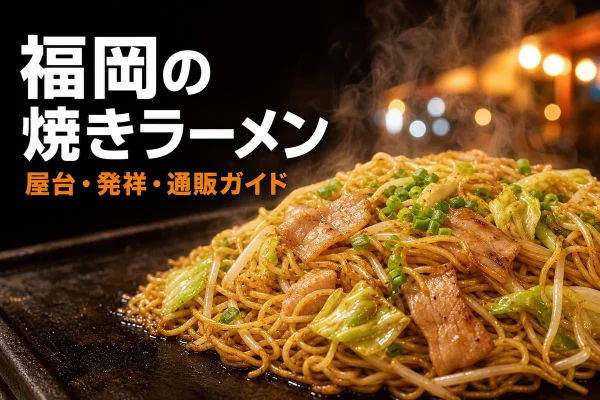
Yaki ramen is one of Fukuoka’s most distinctive yatai dishes: thin ramen noodles are stir-fried with meat and vegetables, then coated with tonkotsu broth, sauce and each stall’s own seasoning. It looks like yakisoba, but the ramen noodles and pork-bone richness give it a different texture and flavour.
This guide is designed for visitors choosing where to try it in Tenjin, Nakasu or Watanabe-dori. Yatai can close without notice because of rain, wind, ingredient shortages or the owner’s condition, so keep a second stall in mind and check the same-day status.
Yaki ramen at a glance
Use these points to decide whether the dish and the yatai experience fit your evening.
| What it is | Thin boiled ramen noodles stir-fried with pork, vegetables, tonkotsu broth and sauce |
|---|---|
| Origin | Kokinchan in Tenjin is widely known as the birthplace; the dish dates to the stall’s 1968 opening |
| Best areas | Tenjin, Watanabe-dori and Nakasu |
| Dietary note | Usually contains pork and wheat; sauces may also contain soy and other allergens |
Five practical places to try it
Kokinchan, near the Oyafuko-dori entrance on Showa-dori, is the first choice for the original style. Its noodles are finished with tonkotsu broth and a special sauce. Regular closing days are Thursday and Sunday, but check before travelling.
Yatai Okamoto in front of BiVi Fukuoka at Watanabe-dori offers several versions, including salt-tonkotsu, sauce, takana and pork-kimchi. It is useful when a group wants different flavours.
Nakasu Jūban in Seiryu Park serves its yaki ramen in a hot skillet and suits travellers who want a riverside Nakasu atmosphere. Kitaro Tenjin, beside Hakata Daimaru, pairs the noodles with Chinese-style dishes. KENZO Cafe in Kamikawabata is an indoor alternative when the weather makes yatai unreliable.
How it differs from yakisoba
Standard sauce yakisoba normally uses steamed noodles and yakisoba sauce. Yaki ramen usually starts with thin boiled ramen noodles and adds a small amount of tonkotsu soup. The result is often moist and creamy rather than dry, although every stall has its own balance.
Not every version is brown sauce-flavoured. Salt-tonkotsu, takana and spicy versions are also sold, so ask which flavour is the house speciality before ordering.
Yatai etiquette and payment
- Bring some cash even if a listing mentions QR or card payment.
- Seats are limited. Order, enjoy the food and avoid occupying the counter long after finishing.
- Popular stalls may sell out before the listed closing time.
- In winter dress for an outdoor meal; in summer carry water and expect heat around the cooking area.
- If you have allergies, show the ingredients in writing. Tonkotsu broth cannot normally be made vegetarian.
Useful official checks before you go
Fukuoka City’s official yatai portal helps confirm licensed stalls and locations. Individual menus can also be checked on the Okamoto, Nakasu Jūban and Kitaro Tenjin pages.
Hours are a planning reference, not a guarantee. Check again on the day, especially after heavy rain, strong wind or a public event.
Plan the rest of your ramen evening
These Fukuoka guides explain how to order ramen and how to choose a yatai area.