This translation was prepared with AI assistance and reviewed by the editorial team.
The stalls survived not because the old street system was left unchanged, but because the city replaced decline and informal succession with rules, infrastructure and public recruitment.
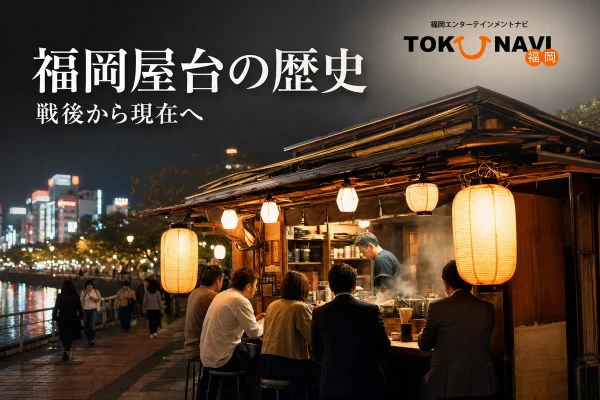
Fukuoka’s yatai are working restaurants in public space. Their story helps explain both the close counter culture visitors enjoy and the rules operators must follow.
Timeline
| After 1945 | Returnees and unemployed residents opened mobile food stalls during postwar recovery. |
|---|---|
| 1950 | A mobile-food operators’ association was formed. |
| 1962 | Road-use guidelines were established; city records counted 370 stalls. |
| Late 1960s–1970s | The number peaked at more than 400. |
| 1988 | Stalls were consolidated around Seiryu Park; 213 were recorded. |
| 1995 | New entry was generally stopped, creating a one-generation-only future and accelerating decline. |
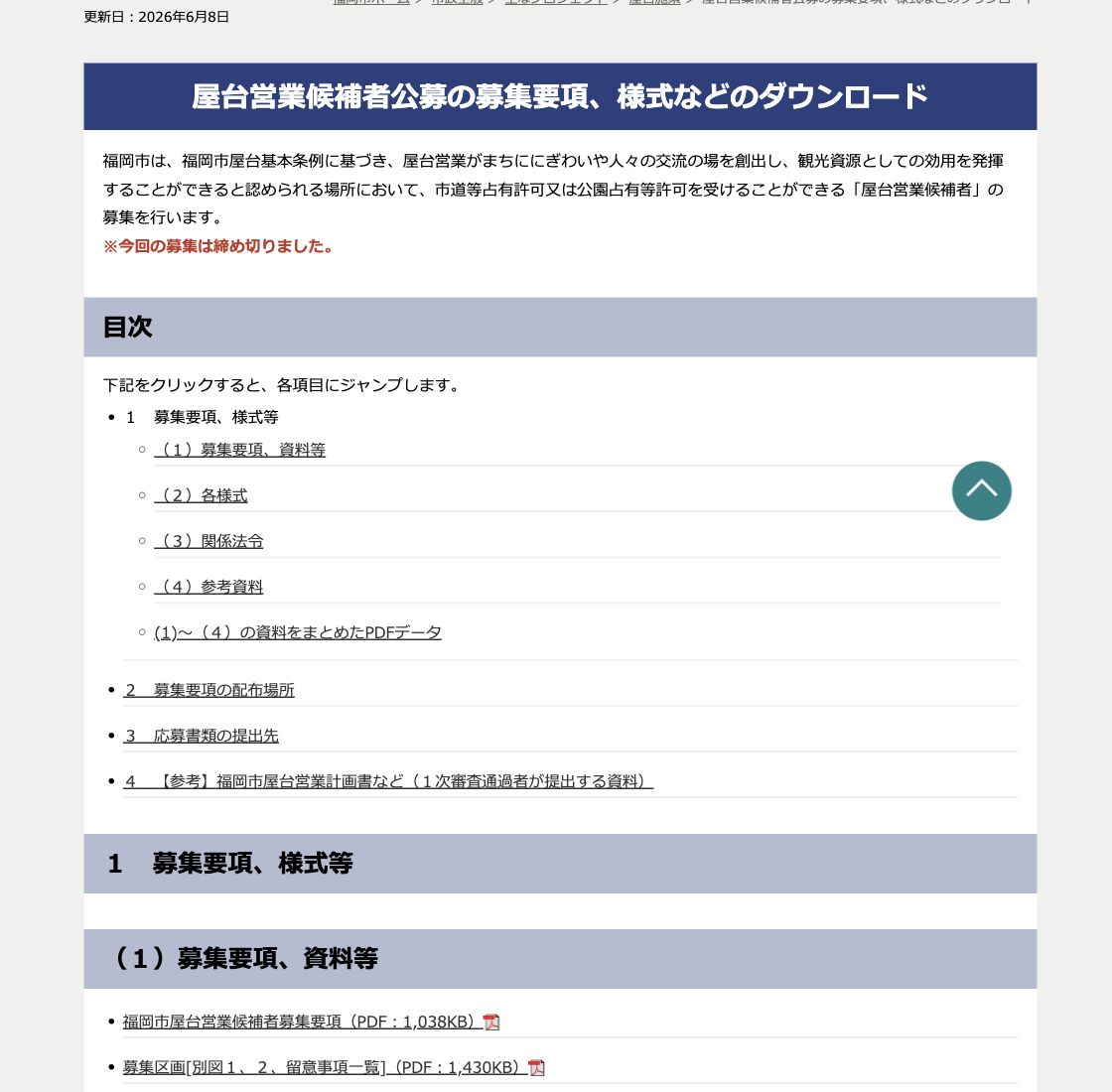
| 2013 | Fukuoka enacted Japan’s first basic ordinance specifically for yatai. |
| 2017 | Twenty-three operators from the first public recruitment began opening. |
| 2023 | Thirteen newly recruited stalls opened, including seven that revived the Nagahama cluster. |
| 2025 | Six more opened; the recruitment system received a Good Design Best 100 award. |
| April 1, 2026 | City materials recorded 100 stalls; a sixth recruitment covered 23 plots for later openings. |
What the 2013 ordinance changed
The ordinance recognised yatai as contributors to city life and tourism while requiring safe public space, sanitation and neighbourhood coexistence. Operators need the relevant road, park and food-service permissions; the named operator must work at the stall, and compliance can affect renewal.
Public recruitment assesses the business plan, safety, legal compliance and relationship with the community. It opens the culture to new operators without giving permanent private control of a public street.
Yatai today
The main visitor areas are Tenjin, Nakasu–Seiryu Park and Nagahama. A stall may set up only for the permitted night window, and bad weather, illness or supply can still cause same-day closure. Fukuoka’s official digital yatai guide helps check current operating status.
What visitors should know
- Do not assume every stall serves ramen; menus now range from oden and yakitori to creative dishes.
- Keep a second choice and check same-day opening information.
- Small groups fit more easily. Do not hold seats after finishing when people are waiting.
- Confirm prices, any otoshi charge and payment method before ordering.
- Food is prepared in a compact shared workspace. Ask carefully about pork, fish, alcohol and allergens.
- Takeaway and raw-food service are restricted; enjoy the food at the stall.
Fukuoka City yatai information
Choose a stall with the current Fukuoka yatai guide, and learn the local noodle background in the Nagahama ramen guide.