This translation was prepared with AI assistance and reviewed by the editorial team.
Arrive in the morning for the widest produce and seafood choice, eat before restaurant closing time, and combine one station with nearby sightseeing instead of racing through several.
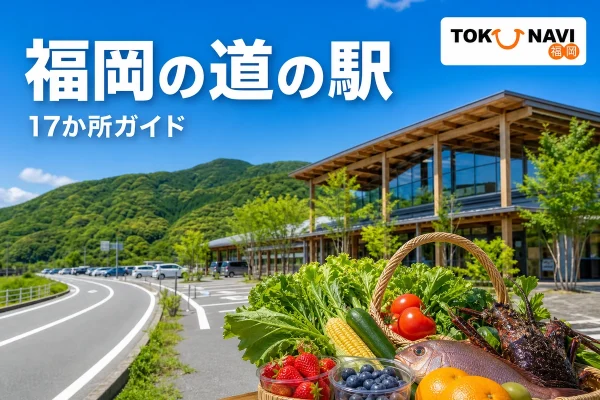
Japan’s roadside stations combine free rest facilities with regional markets, food and tourist information. Most Fukuoka locations are easiest by car and different buildings can keep different hours.
| Purpose | Choice | Tip |
|---|---|---|
| Seafood | Munakata | Arrive in the morning; check the day’s catch |
| Seasonal fruit | Ukiha / Harazuru | Check harvest and arrival periods |
| Hot spring and children | Oto Sakuramachi | Check each facility’s hours |
| Chikugo food | Miyama / Oki | Check restaurant closing days |
Six useful choices
Michi-no-Eki Munakata (道の駅むなかた)
Best known for Genkai Sea seafood and local produce. Arrive early, ask whether fish needs cooking, and keep chilled purchases cold. Pair it with Munakata Taisha or the Fukutsu coast.
Michi-no-Eki Ukiha (道の駅うきは)
A strong seasonal-fruit stop with views over the Chikugo Plain. Fruit changes through the year; combine it with Yoshi’s white-walled streets, Ukiha Inari or a booked fruit farm.
Michi-no-Eki Oto Sakuramachi (道の駅おおとう桜街道)
A large family stop with a market, food, hot-spring facilities, play areas and seasonal illumination. Bath, ride and event charges are separate; verify current opening information.
Michi-no-Eki Harazuru / Farm Station Basaro (道の駅原鶴)
Convenient for vegetables, fruit and Harazuru Onsen. Sunflowers are seasonal, not guaranteed; check bloom and event information before a dedicated trip.
Michi-no-Eki Miyama (道の駅みやま)
Local vegetables, fruit, Ariake products, sake and snacks such as tamameshi. It can be paired with Kiyomizudera or the Miyama–Kiyomizuyama Kyushu Olle course.
Michi-no-Eki Oki (道の駅おおき)
Centred on Oki’s mushrooms and agricultural products, with food and seasonal experiences. Check restaurant and mushroom-picking operations separately from the market.
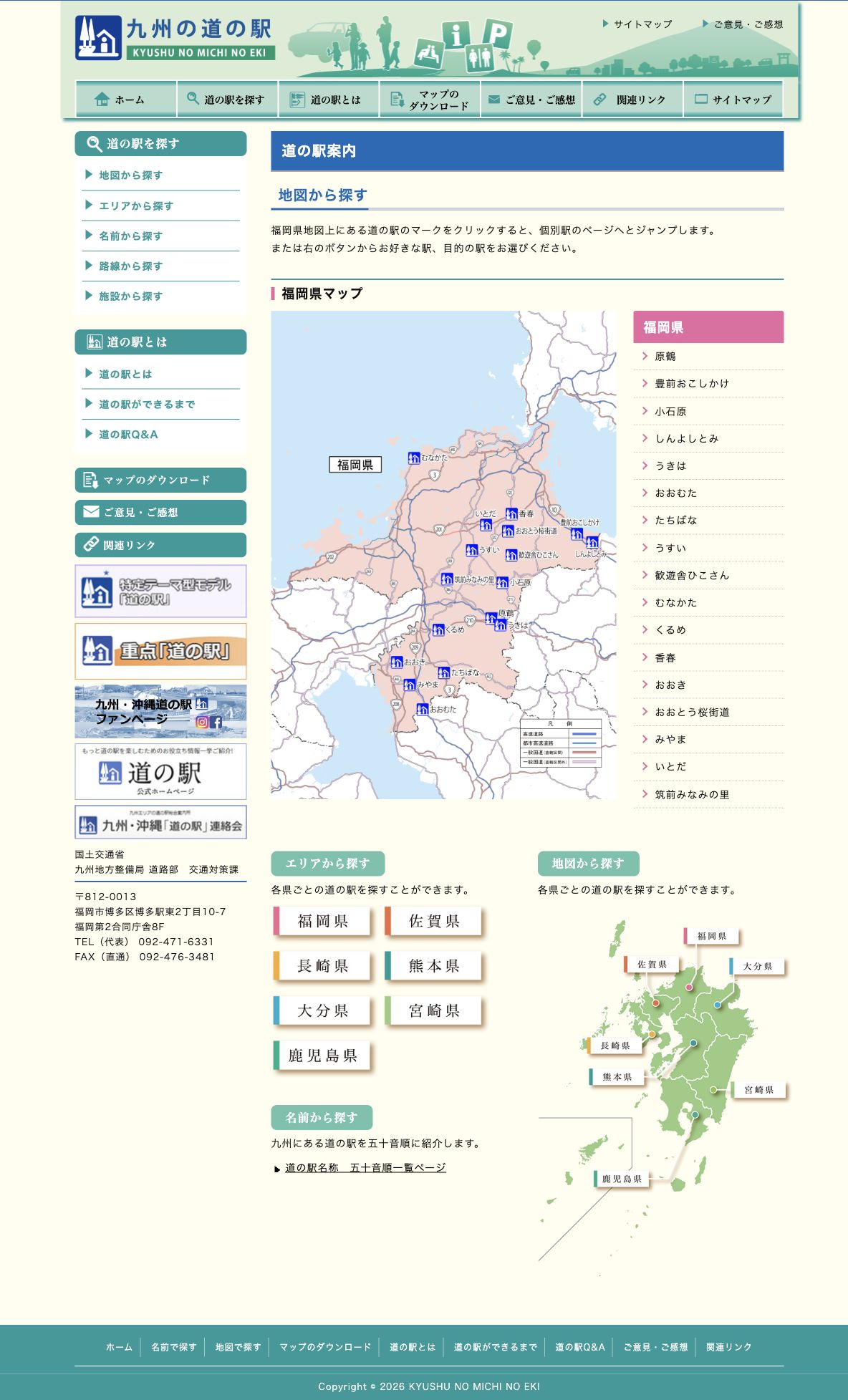
Official current list of all 17 in Fukuoka
- Harazuru (原鶴)
- Buzen Okoshikake (豊前おこしかけ)
- Koishiwara (小石原)
- Shin-Yoshitomi (しんよしとみ)
- Ukiha (うきは)
- Omuta (おおむた)
- Tachibana (たちばな)
- Usui (うすい)
- Kanyusha Hikosan (歓遊舎ひこさん)
- Munakata (むなかた)
- Kurume (くるめ)
- Kawara (香春)
- Oki (おおき)
- Oto Sakuramachi (おおとう桜街道)
- Miyama (みやま)
- Itoda (いとだ)
- Chikuzen Minami-no-Sato (筑前みなみの里)
Practical shopping and food tips
- Markets may sell out well before the building closes.
- Card, QR and tax-free support are not guaranteed; carry some yen.
- Fresh fish may be intended for cooking, not raw consumption. Ask staff.
- Bring an insulated bag for seafood, meat and dairy products.
- Public transport can be infrequent; confirm the return service in advance.
Official MLIT Kyushu list for Fukuoka
Build a full day with the seven Fukuoka drive routes.
Why morning visits work best
Fresh fish, fruit, vegetables and prepared food can sell out before the building closes. Use the station’s official site for its business day and same-day arrivals, and treat restaurant, bath and activity hours as separate from the market.
Nearby travel ideas
Combine one stop with the Fukuoka drive-route guide, Harazuru Onsen day baths or the Fairfield by Marriott Fukuoka Ukiha area guide.